

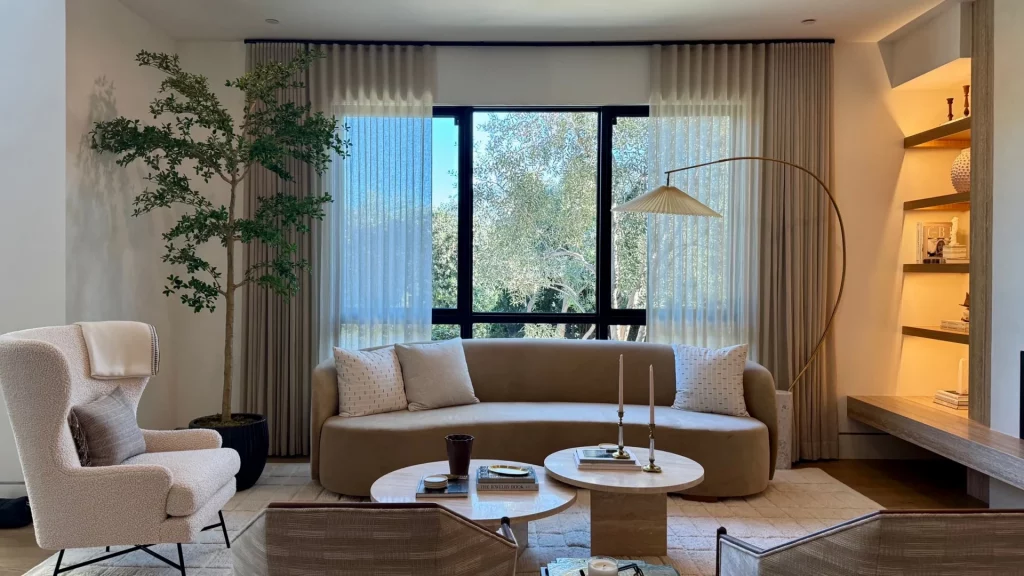
How to Layer Window Treatments Like a Designer
Layering window treatments sounds like a design upgrade. In reality, it’s one of the easiest ways to make a room feel heavy, cluttered, or impractical if it’s done without a clear purpose.
In Los Angeles homes, layering is rarely about decoration alone. Strong sunlight, long afternoons, privacy needs, and large windows often require more than one solution. The key is understanding why you’re layering and what each element is supposed to do.
This guide explains how designers layer window treatments intentionally. When it improves comfort and flexibility, when it’s unnecessary, and how to avoid common mistakes that look fine on Pinterest but fail in real homes.
What does “layering window treatments” actually mean?
Layering means combining two or more window treatments so that each one solves a different problem. It’s not about adding fabric for the sake of style.
Most layered setups include:
- a functional layer that controls light and glare
- a secondary layer that adds privacy, softness, or warmth
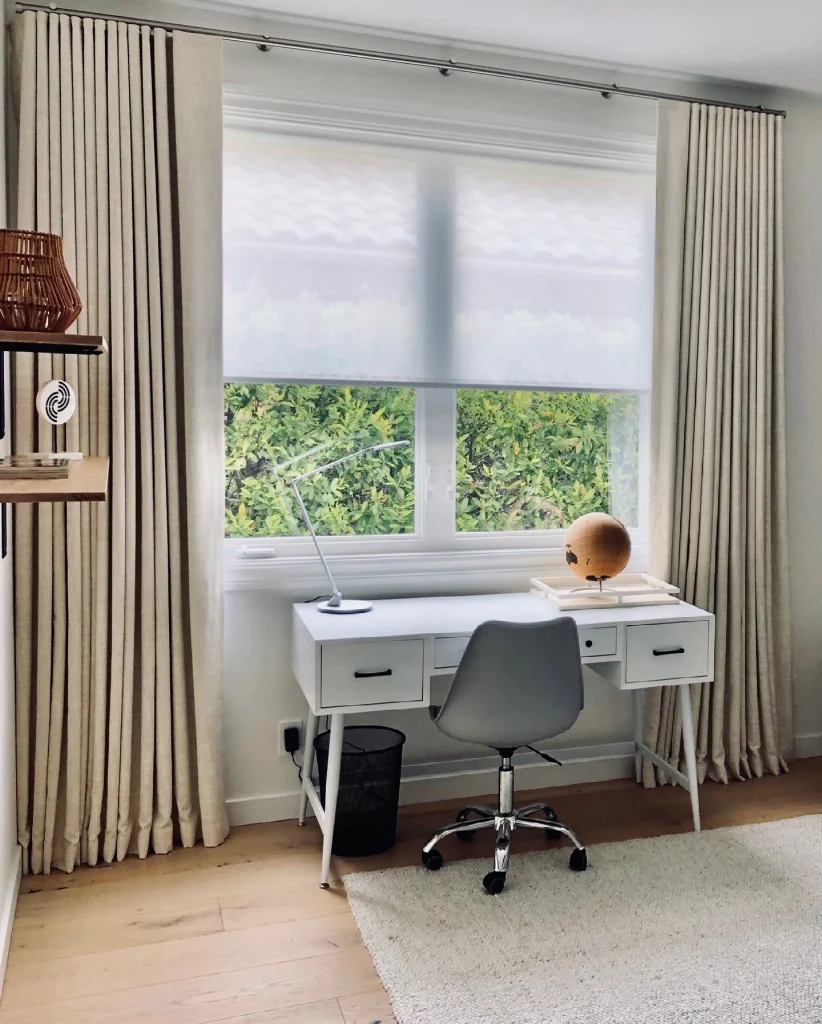
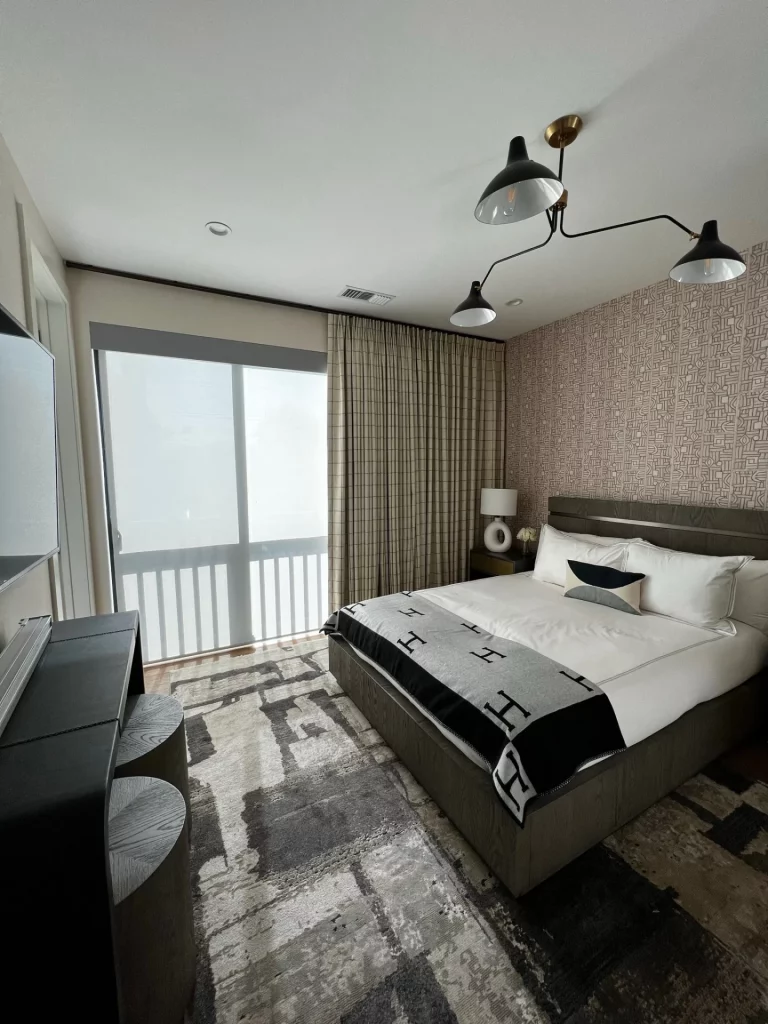
In Los Angeles homes, this often looks like a roller shade for daytime use paired with drapery for evenings. The shade handles the sun. The drapery finishes the room and provides flexibility at night.
When both layers have a clear role, the result feels natural. When they don’t, the window quickly becomes the most awkward part of the room.
Why layering works especially well in Los Angeles homes
LA light changes dramatically throughout the day. A room that feels perfect in the morning can become uncomfortable by mid-afternoon and too exposed at night.
Layering allows you to respond to those shifts without constantly compromising. During the day, you might rely only on a shade. In the evening, the shade stays up and drapery takes over. On cloudy days, everything can stay open.
This flexibility is why layered solutions are so common in living rooms, primary bedrooms, and large open spaces across Southern California.
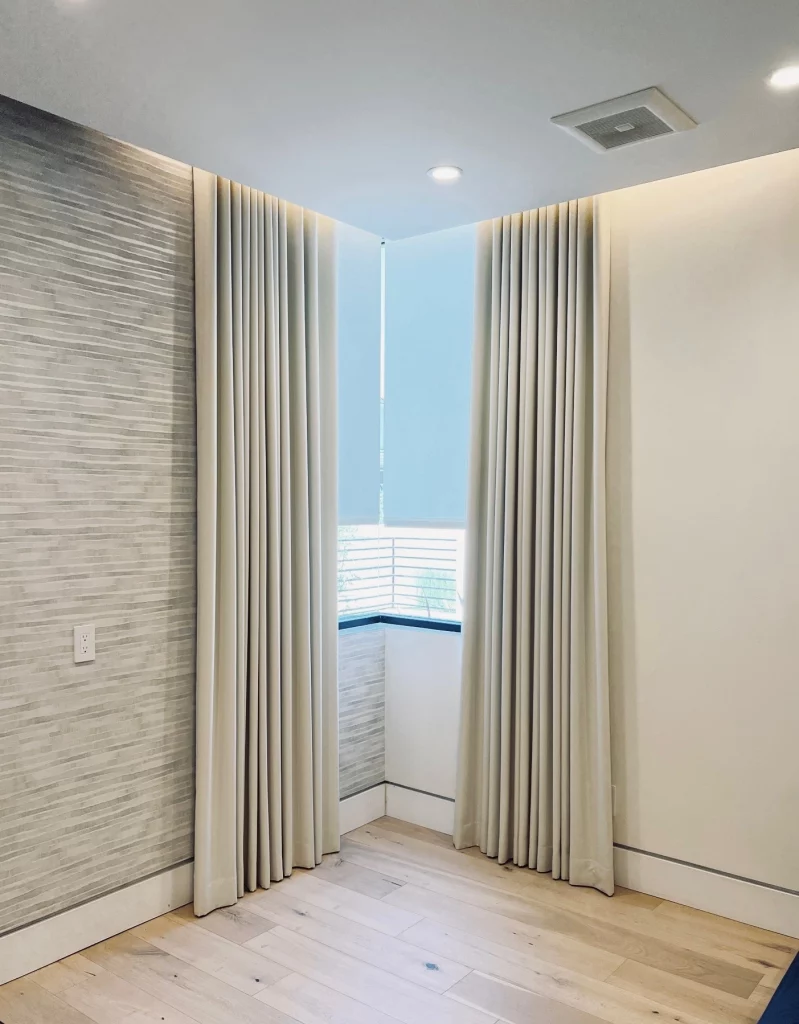
You can see real examples of this approach in Paired Drapes and Shades projects.
What’s the most practical layered combination?
The most common and practical combination is roller shades + drapery.
Roller shades:
- manage glare and heat
- keep the room visually clean
- work well with large windows
Drapery:
- adds softness and depth
- provides nighttime privacy
- helps with acoustics and comfort
This setup works because the two layers don’t compete visually. Each one activates at a different time of day.
In many homes, this combination solves more problems than trying to force one product to do everything.
Can layering work in modern, minimal interiors?
Yes – but only if it’s restrained.
Modern interiors benefit from:
- slim shade profiles
- neutral or textured fabrics
- simple drapery headers like ripplefold or Europleat
The mistake many people make is choosing heavy drapery fabrics or overly decorative hardware in minimalist spaces. That’s when layering starts to feel excessive.
When done correctly, layered treatments actually enhance minimal interiors by softening light and improving comfort without adding visual noise.
Shades first or drapery first - how do designers decide?
Designers usually start with the problem, not the product.
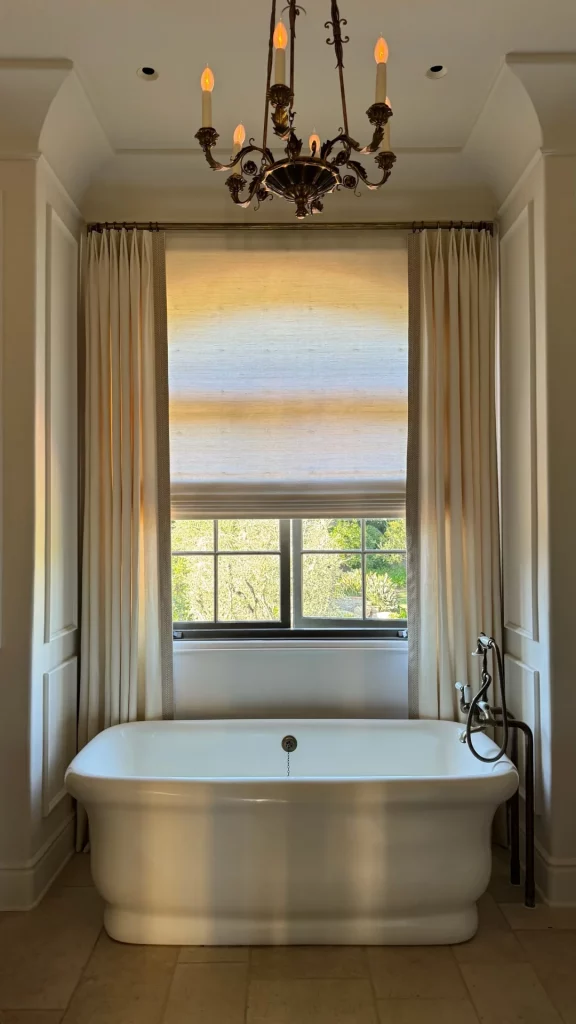
If the main issue is glare, heat, or daytime usability, shades come first. If privacy or softness is the primary concern, drapery may lead the decision.
In most Los Angeles homes, daytime comfort drives the choice. That’s why shades often form the base layer, with drapery added to complete the space.
This logic keeps the design grounded in how the room is actually used.
Common layering mistakes that make rooms feel heavy
The most frequent mistakes include:
- using two visually dominant layers
- mounting drapery too low or too close to the window
- choosing fabrics that are too thick for the room size
- layering without a functional reason
Layering should feel effortless. If the window draws attention for the wrong reasons, something is off.
Looking at real installations instead of styled photos helps avoid these mistakes. The Portfolio is a good place to see how balance is achieved in finished homes.
Does every room need layered window treatments?
No. Some rooms work better with a single solution.
Bathrooms, kitchens, and smaller secondary spaces often benefit from simplicity. Layering shines in rooms that are used throughout the day and into the evening, especially where light conditions change dramatically.
Designers aim for cohesion across the home, not repetition. That’s why layering is applied selectively.
How layering affects ceiling height and proportions
Layering can either enhance or hurt proportions.
When drapery is mounted high and wide, it visually stretches the wall and makes ceilings feel taller. When mounted too low or narrow, it compresses the space.
Shades, on the other hand, tend to sit quietly within the window opening. Pairing them with well-placed drapery allows you to control proportions intentionally instead of accidentally.
Can you layer without blocking the view?
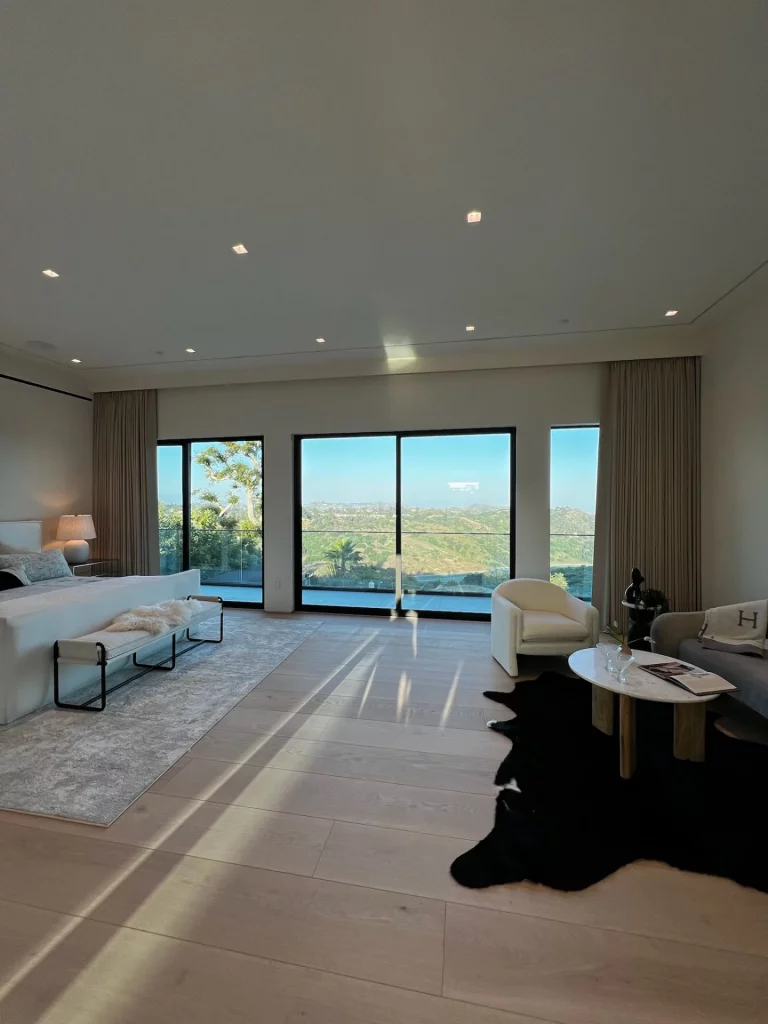
Yes, and this is especially important in hillside and coastal homes.
Designers often use:
- lighter or more open shades during the day
- drapery that stays open unless needed
This preserves the view while still offering flexibility. Layering doesn’t mean covering glass all the time. It means having options when conditions change.
How to know if layering is right for your space
If your room feels uncomfortable at certain times of day, layering is often the answer. If it already works well with one treatment, adding more may be unnecessary.
The best layered designs solve problems quietly. They don’t announce themselves.
Thinking about layering window treatments?
Not sure which combination works for your space? Tell us about your room, light exposure, and privacy needs — we’ll help you choose layers that actually make sense.